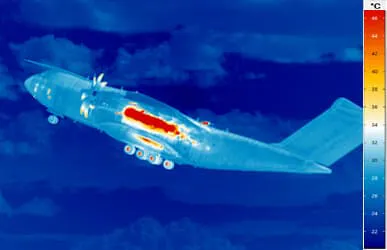
Ther­mo­graphy for Material Testing

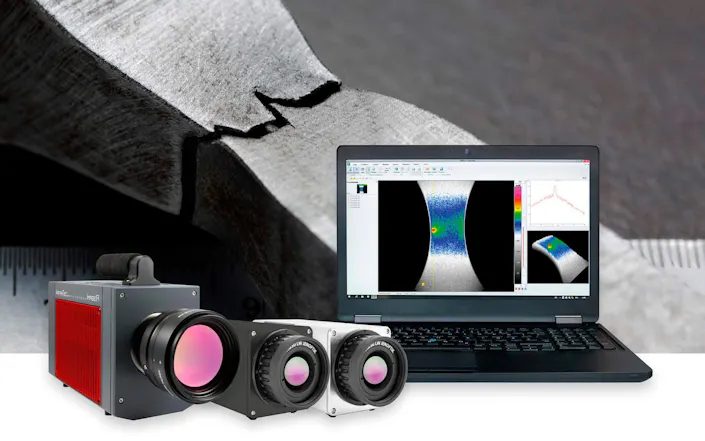
Thermography allows for the efficient and non-destructive inspection of many materials, components, and joints for defects. The method is used, for example, for process monitoring in additive manufacturing or – in combination with digital image correlation (DIC) – to inspect workpieces under mechanical stress.

Thermography is ideally suited for

  • Analyzing temperature differences inherent to the process or externally introduced heat flows,

  • Thermo-elastic stress analysis (TSA) to differentiate areas with varying mechanical loads,

  • Detecting deep-lying defects through pulsed excitation, and

  • Inline applications in continuous quality control.

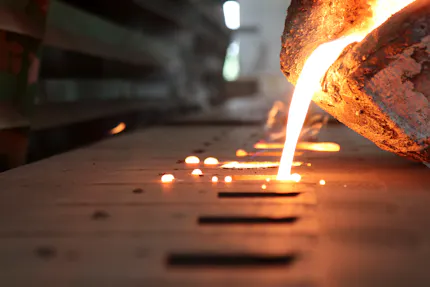
Material testing, stress test with thermal cameras from InfraTec - Picture credits: © iStock / kimtaro
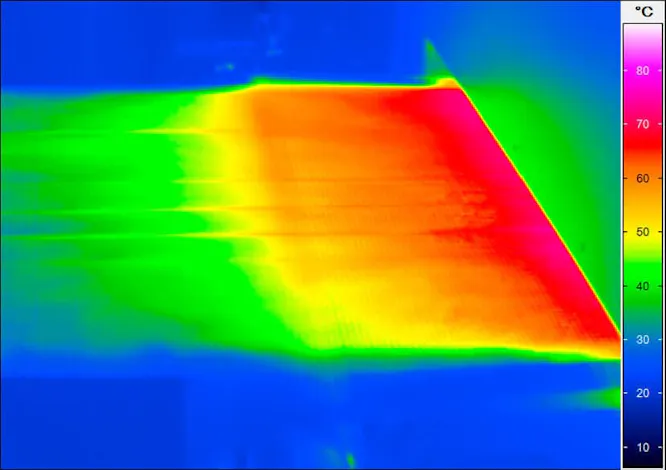
Analysis of a Carbon Composite (CFC) using Lock-in Thermography
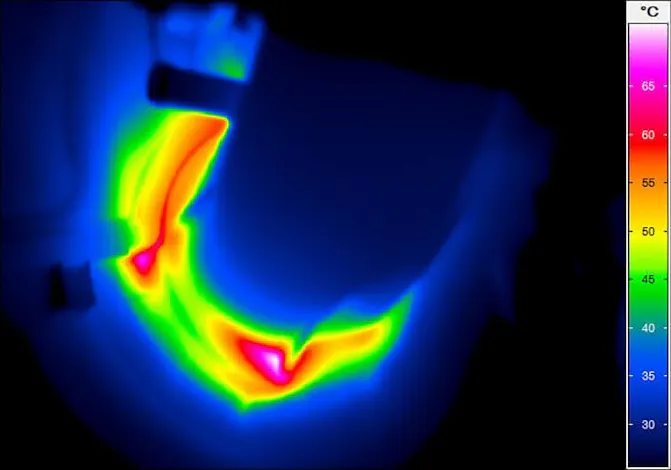
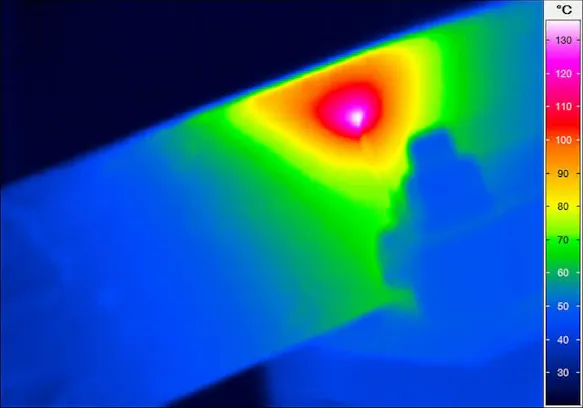
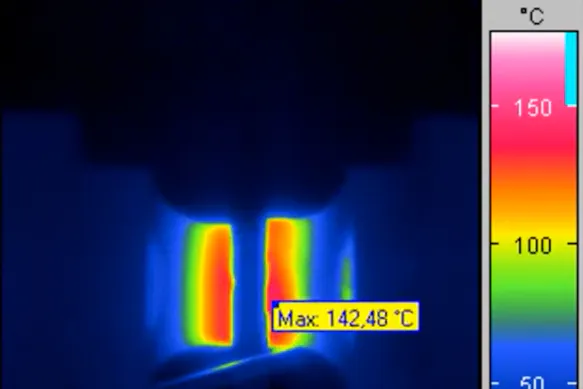
Heating of synthetic substance under vibration
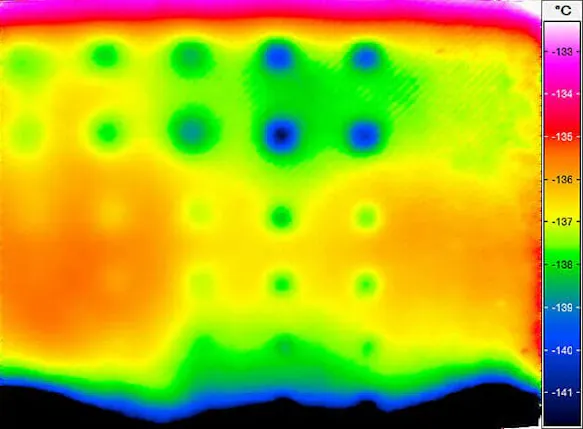
Detection of hidden damage liability
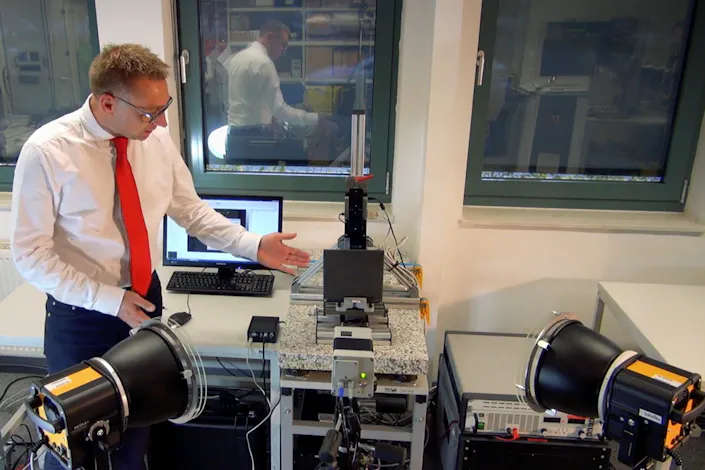
Test of a synthetic roller
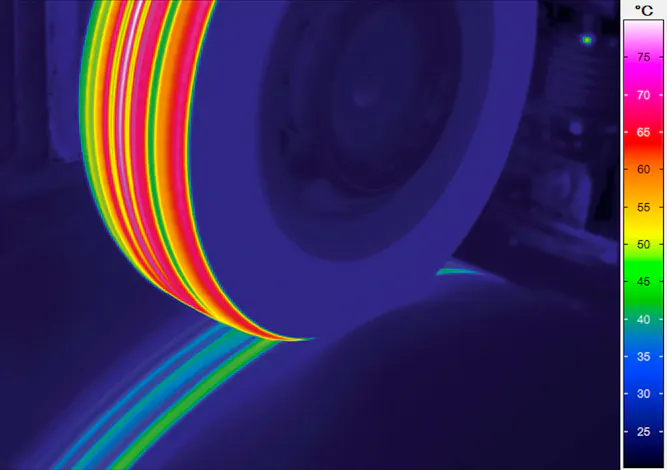
Infrared thermal imaging to monitor the film production
0 | 6

Infrared Camera Systems Minimize Product Waste from Testing Proced­ures

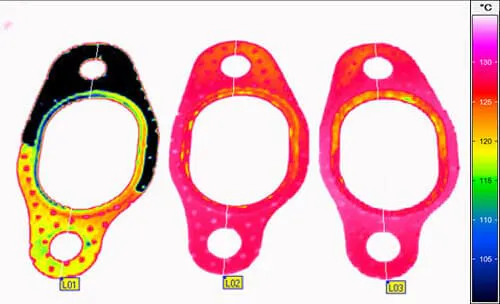
Active thermography in the production of CFC plates

As part of non-destructive testing (NDT) or thermographic material testing, materials are examined for inhomogeneities and thermal properties, the presence and location of hidden components are verified, and joints are tested. NDT also includes the detection of cracks in materials and the functional testing of electrical assemblies.

The advantage of non-destructive testing is clear: because the test specimens remain intact, both time and costs are saved. Additional tests can be carried out, and quality defects can be corrected in a targeted manner.

The use of infrared thermography in the non-destructive testing of thermal properties offers many additional advantages. The method is suitable for a wide variety of materials and can detect a broad range of defects. Unlike methods such as ultrasonic testing (UT), thermography allows even large areas to be inspected in a single step.

Passive Thermography and Active Heat-Flux Thermography for Defect Detection

Both active and passive thermography are used in materials testing. Passive thermography can be applied when the temperature increase is caused directly by the production process, internal friction, chemical reactions, or similar effects. By contrast, if heat must be introduced externally in a targeted manner to generate measurable temperature effects, this is referred to as active thermography or active heat-flux thermography. Excitation can be provided, for example, by a flash lamp, a halogen lamp, or an electric current. The heat generated inside the test specimen flows toward the surface, and inclusions, cracks, or similar inhomogeneities appear as deviations in the temporal temperature profile, which can be recorded using a thermal imaging camera.

The choice between passive and active thermography therefore depends largely on whether the test object already has a measurable temperature distribution or whether energy must be introduced in a targeted manner to make thermal effects measurable.

Stress test on a truck axle

Live Online Events 2026

thermal imaging mechanical assembly bearing

Thermoelastic Stress Analysis

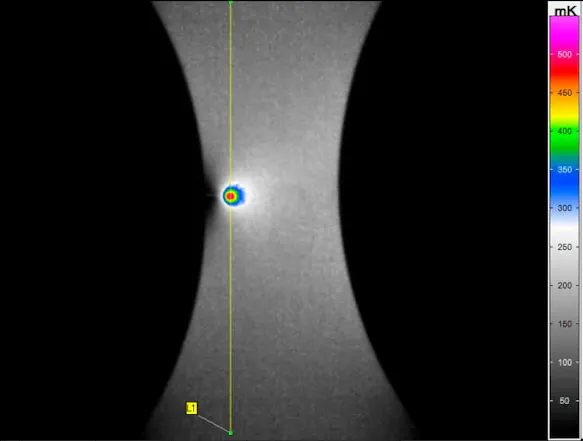
These tests, also known as material stress tests, are based on the thermoelastic effect. When a test specimen is subjected to mechanical loading, dynamic stresses develop within the material, manifesting as temperature differences on the surface. These differences can be measured using sensitive thermographic cameras. Lock-in thermography makes it possible to detect even extremely small temperature changes of less than one millikelvin.

Learn more about thermography in mechanics

Real-World Examples: Thermal Stress Analysis

Thermal Stress Analysis of Metals, picture credit: © iStock.com / kimtaro

Thermal Stress Analysis of Metals

Stress changes during tensile testing provide information about material properties of metals such as tensile strength. With the help of thermographic cameras metallic solid bodies can be tested for such stress changes.

InfraTec/GOM Webinar

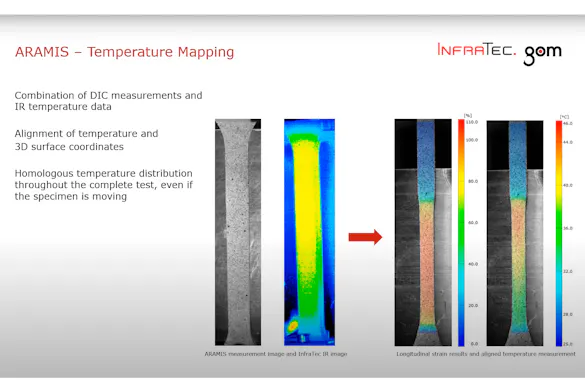
Combin­a­tion of Digital Image Correl­a­tion and Ther­mo­graphic Meas­ure­ments

The combination of measuring results from the digital image correlation (ARAMIS, DIC) and temperature measuring data from infrared cameras enables the simultaneous analysis of the thermal and mechanical behavior of test specimens in the materials and components testing field.

Thermal Stress Analysis of Metals, picture credit: © iStock.com / kimtaro

Thermal Stress Analysis of Metals

Stress changes during tensile testing provide information about material properties of metals such as tensile strength. With the help of thermographic cameras metallic solid bodies can be tested for such stress changes.

InfraTec/GOM Webinar

Combin­a­tion of Digital Image Correl­a­tion and Ther­mo­graphic Meas­ure­ments

The combination of measuring results from the digital image correlation (ARAMIS, DIC) and temperature measuring data from infrared cameras enables the simultaneous analysis of the thermal and mechanical behavior of test specimens in the materials and components testing field.

Thermography in Additive Manufaturing of Ceramics

Monitoring and Defect Detection in Additive Manufacturing

In additive manufacturing, also known as 3D printing, material is applied layer by layer. Passive thermography can be used to monitor cooling and curing processes, while active thermography helps detect defects such as voids or inclusions in the material.

Learn more about thermography in additive manufacturing

Real-World Examples: Additive Manufacturing

infrared camera at 3d printer

3D Printing under the Thermographic Microscope

Additive manufacturing has developed rapidly from its original field of prototype manufacturing, becoming a complete production technology for use on an industrial scale. Precise monitoring of machinery, equipment, materials and – above all – temperatures is of vital importance in this regard.

InfraTec Uni Bayreuth - Analysis of the Thermal Conductivity

Analysis of the Thermal Conduct­ivity in Nano- and Meso­struc­tured Polymer Systems

New materials with precisely controlled optical and thermal transport characteristics can make a large contribution to resource-saving thermal management. Scientists of the University of Bayreuth are pursuing this vision. They use infrared thermography to quantitatively determine thermal conductivity in nano- and mesostructured polymer materials.

infrared camera at 3d printer

3D Printing under the Thermographic Microscope

Additive manufacturing has developed rapidly from its original field of prototype manufacturing, becoming a complete production technology for use on an industrial scale. Precise monitoring of machinery, equipment, materials and – above all – temperatures is of vital importance in this regard.

InfraTec Uni Bayreuth - Analysis of the Thermal Conductivity

Analysis of the Thermal Conduct­ivity in Nano- and Meso­struc­tured Polymer Systems

New materials with precisely controlled optical and thermal transport characteristics can make a large contribution to resource-saving thermal management. Scientists of the University of Bayreuth are pursuing this vision. They use infrared thermography to quantitatively determine thermal conductivity in nano- and mesostructured polymer materials.

InfraTec Bondung and Sealing - Hot gas

Inspection of Fiber-Reinforced Composites and Verification of Adhesive and Sealed Joints

Lightweight construction is used in countless industrial sectors. Thermography can be used to determine whether fiber-reinforced composites possess the desired properties and whether the material contains defects. The quality of sealed joints can also be assessed on the basis of the temperature distribution immediately after sealing.

Learn more about thermography for inspecting adhesive and sealed joints

Real-World Examples: Fiber-Reinforced Composites and Verification of Adhesive and Sealed Joints

Monitoring the Surface Temperature on Curing Epoxy Resin Samples - Picture credits: © AdobeStock / wichientep

Monit­oring the Surface Temper­ature on Curing Epoxy Resin Samples

Epoxy resin systems are mostly used as a matrix material in fibre composites. In a variety of manufacturing processes, the corresponding resin system is processed in a flowable state. The material only acquires its rigidity in a subsequent curing process. This is characterized by an exothermic chemical reaction with a pronounced temperature dependence.

Thermal imaging of a shrink tunnel prototype

Thermal Imaging in Plastics Engineering

A core topic of modern materials research is the research on plastics as a versatile material for various technological applications. Quite often, industrial applications are developed from academic basic research. At the Faculty of Mechanical Engineering at the University of Paderborn, Kunststofftechnik Paderborn (KTP) works intensively on this topic using a VarioCAM® HD for this purpose.

Monitoring the Surface Temperature on Curing Epoxy Resin Samples - Picture credits: © AdobeStock / wichientep

Monit­oring the Surface Temper­ature on Curing Epoxy Resin Samples

Epoxy resin systems are mostly used as a matrix material in fibre composites. In a variety of manufacturing processes, the corresponding resin system is processed in a flowable state. The material only acquires its rigidity in a subsequent curing process. This is characterized by an exothermic chemical reaction with a pronounced temperature dependence.

Thermal imaging of a shrink tunnel prototype

Thermal Imaging in Plastics Engineering

A core topic of modern materials research is the research on plastics as a versatile material for various technological applications. Quite often, industrial applications are developed from academic basic research. At the Faculty of Mechanical Engineering at the University of Paderborn, Kunststofftechnik Paderborn (KTP) works intensively on this topic using a VarioCAM® HD for this purpose.

Quality Assurance for Coating Processes | InfraTec / Picture Credits: © iStock.com / Greppe

Quality Assurance in the Coating of Sheet Metal, Films, Glass, and Other Materials

Thermography enables the inspection of the uniformity and thickness of liquid coatings such as water, oil, and adhesive layers. In addition, the properties of a wide range of functional coatings made of metals, semiconductors, dielectrics, organic materials, and nanomaterials can be evaluated using thermography.

Learn more about quality assurance in coatings

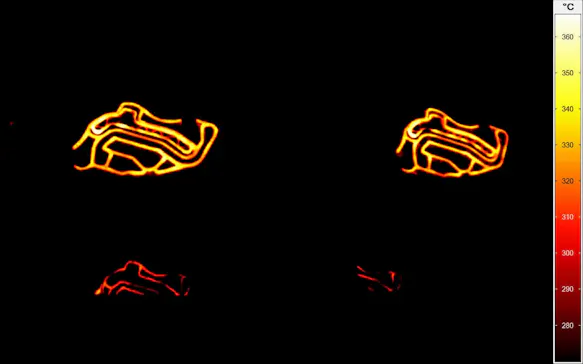
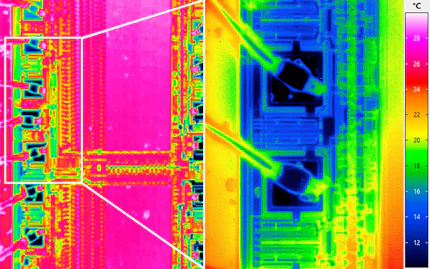
Micro-thermography of an electronics-board

Defect Detection in Electronic Components

In electronic components, current flow causes heating due to ohmic resistance. Active thermography can be used to visualize areas of increased resistance caused by defects or poor connections.

Learn more about thermography in electronics testing

Real-Word Examples: Testing Electronic Components

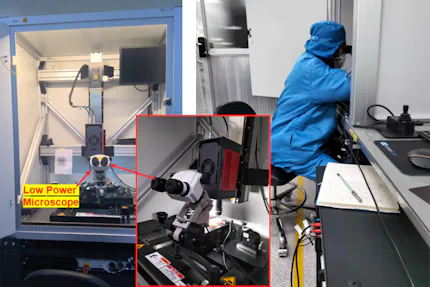
Case study: Workstation for fault analysis at STM

Fault Isolation on Chips and Power Modules at STM

STMicroelectronics is a European manufacturer that produces a wide range of semiconductor components for electronic applications worldwide. The company uses InfraTec’s E-LIT system to perform fault analysis on chips, discrete components, sensors, LEDs, and power modules. Users particularly appreciate the system’s flexibility when testing different components and its ability to visually identify faults with ease.

Failure Analysis on Electronic Components | ©BTU Cottbus-Senftenberg

Ther­mo­graphy on the Trail of the Fault

Thermographic damage and functional analysis of electronic components has become one of the established testing methods in electrical engineering. This method is also used for research purposes at the Institute for Electrical Systems and Energy Logistics at BTU Cottbus-Senftenberg. In this context, Prof. Dr. Ralph Schacht focuses intensively on material and system characterization as well as non-destructive failure analysis of printed circuit boards, electronic components, microelectronics, and composite systems in assembly and interconnection technology.

InfraTec Thermography Success Story: CAU Kiel

Power Elec­tronics – Effi­cient Control of the Futures Energy

The energy efficiency of electronic components is playing an increasingly important role in numerous fields of application. What’s more, in our age of electronics and high-tech, there is a demand for ever-faster active components, higher power densities in miniaturized systems, and absolute reliability. Added to this are the demands for environmentally conscious resource procurement and the requirement that increases in module performance must go hand in hand with lower energy consumption.

Case study: Workstation for fault analysis at STM

Fault Isolation on Chips and Power Modules at STM

STMicroelectronics is a European manufacturer that produces a wide range of semiconductor components for electronic applications worldwide. The company uses InfraTec’s E-LIT system to perform fault analysis on chips, discrete components, sensors, LEDs, and power modules. Users particularly appreciate the system’s flexibility when testing different components and its ability to visually identify faults with ease.

Failure Analysis on Electronic Components | ©BTU Cottbus-Senftenberg

Ther­mo­graphy on the Trail of the Fault

Thermographic damage and functional analysis of electronic components has become one of the established testing methods in electrical engineering. This method is also used for research purposes at the Institute for Electrical Systems and Energy Logistics at BTU Cottbus-Senftenberg. In this context, Prof. Dr. Ralph Schacht focuses intensively on material and system characterization as well as non-destructive failure analysis of printed circuit boards, electronic components, microelectronics, and composite systems in assembly and interconnection technology.

InfraTec Thermography Success Story: CAU Kiel

Power Elec­tronics – Effi­cient Control of the Futures Energy

The energy efficiency of electronic components is playing an increasingly important role in numerous fields of application. What’s more, in our age of electronics and high-tech, there is a demand for ever-faster active components, higher power densities in miniaturized systems, and absolute reliability. Added to this are the demands for environmentally conscious resource procurement and the requirement that increases in module performance must go hand in hand with lower energy consumption.

Online Events On Demand

Event On Demand

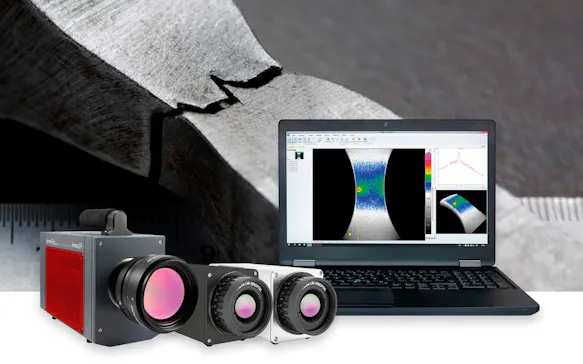
Effi­cient Material Testing – Non-destructive and Contact­less

  • Theoretical background – mechanical force, stress and temperature Methods for analysis

  • Examples from practice with application samples – elastic periodical load test and fatigue test

  • Short overview about InfraTec products

  • Complementary technical lecture 

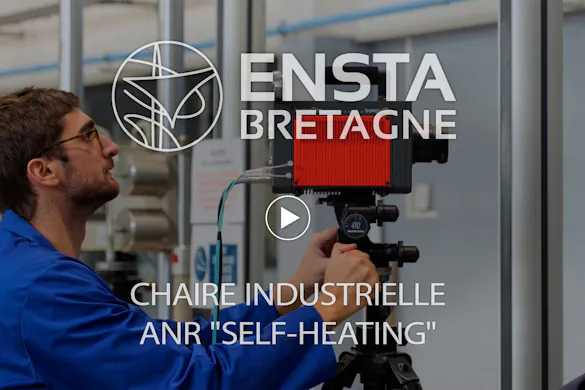
    "Contribution of Thermoelastic Stress Analysis in mechanics of materials and structures: some illustrations" from Prof. Vincent Le Saux, École Nationale Supérieure de Techniques Avancées Bretagne
Request Recording

Material testing, stress test with thermal cameras from InfraTec - Picture credits: © iStock / kimtaro
Event On Demand

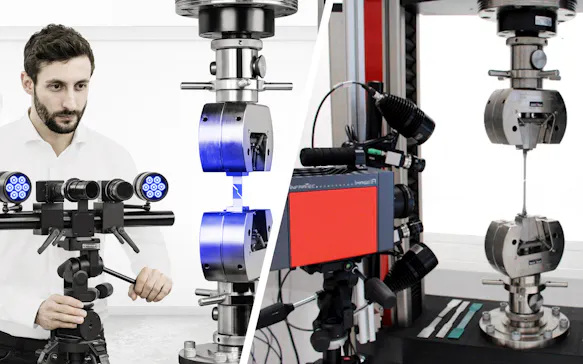
Thermography and Digital Image Correlation – A Winning Team in the Materials and Components Testing Field.

  • Active thermography for non-destructive testing

  • Synchronizing high-tech sensors: ZEISS/GOM ARAMIS and infrared cameras from InfraTec

  • Tracking of temperature on homologous points in 3D space

  • Applications in materials, components and electronic testing

  • Complementary technical lecture "The IGI EcoMapper – High-Precision Aerial Survey in Five Spectral" from Dr. rer. nat. Jens Kremer, Manager R&D, IGI mbH, Germany

Request Recording

Online Event - Thermography and Digital Image Correlation
Event On Demand

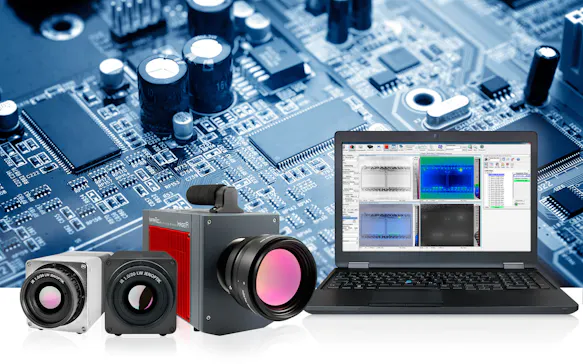
Infrared Lock-in Ther­mo­graphy for Inspec­tion of Elec­tronics and Integ­rated Circuits

  • Failure analysis and defect inspection, quality and process control and flexible R&D solution

  • Hotspot detection on printed circuit boards, integrated circuits, semiconductor material and multi-chip modules

  • Detection of faulty thermal connections of heat sinks, short circuits, soldering defects and wire bonding errors

  • Complementary technical lecture Semiconductor IR-LIT Analytics – Challenges and Case Studies from Marko Hoffmann; Infineon Technologies Dresden GmbH & Co. KG
Request Recording

InfraTec Webinar: Infrared Lock-in Thermography for Inspection of Electronics and Integrated Circuits - Picture credits: © iStock.com / scorpp
Event On Demand

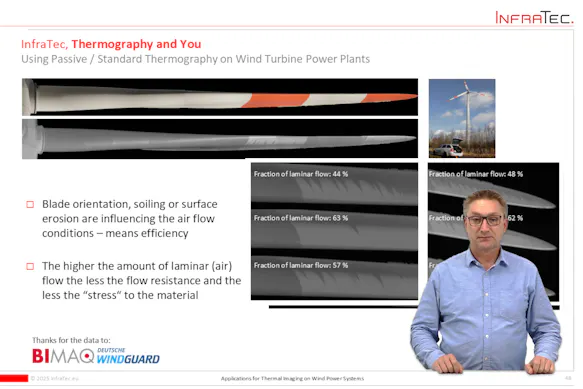
Applic­a­tions for Thermal Imaging on Wind Power Systems

  • General information about infrared thermography and presentation of different infrared camera techniques

  • Monitoring wind turbine power plants by (passive) thermography

  • Principle & methods of active thermography and examples

  • Technical Lecture “Inspection of Wind Turbine Blades with Ground-based Passive Thermography” from Michael Stamm, Federal Institute for Materials Research and Testing (BAM)

Request Recording

Application for Thermal Imaging on Wind Power Systems
Contact to thermography division of InfraTec

Would You Like to Know More?

It is not unusual for tasks to be associated with special requirements. Discuss your specific application needs with our specialists, receive further technical information or learn more about our additional services.

Europe & Rest of World
InfraTec GmbH Infrarotsensorik und MesstechnikGostritzer Straße 61 - 6301217 DresdenGERMANY

Asso­ci­ated Ther­mo­graphic Auto­ma­tion Solu­tions

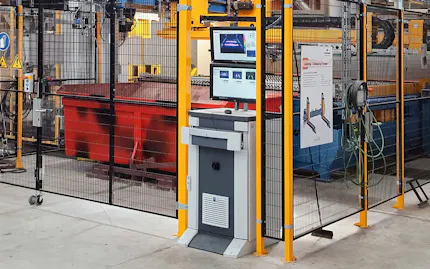
Automation InfraTec INDU-SCAN - In-process industrial temperature measurement
Indus­trial Auto­ma­tion

Process Control – INDU-SCAN

Contactless measurement of temperature distributions and profiles with industrial thermographic cameras permits efficient monitoring and control of temperature-dependent processes and procedures within a system-integrated quality assurance programme in industry.

Quality control for more precision in press hardening PRESS-CHECK
Indus­trial Auto­ma­tion

Quality Control or Press Hardening – PRESS-CHECK

Check the microstructures of sheet metal parts during the stamping process and establish a uniform high strength and quality of all produced stampings safely and with a contact-free method.

WELD-CHECK by InfraTec
Non-destructive Testing

Welding Inspec­tion – WELD-CHECK

Using pulse thermography, WELD-CHECK enables you a quantitative assessment of the inspected welds.

Thermographic automation brake test bench - Picture Credits: © iStock.com / ktsimage
Non-destructive Testing

High-Speed Rotation Test Bench – TRC

Check for long-life fatigue strength of mechanical components in load tests, using high-end infrared cameras.

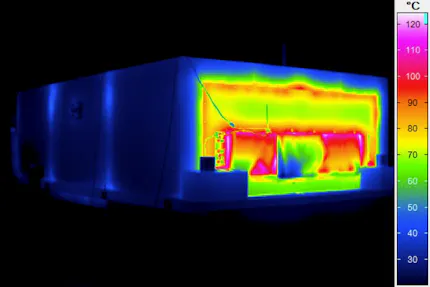
E-Lit Cabinet from InfraTec for Infrared Thermography
Non-destructive Testing

Electronic / Semiconductor Testing – E-LIT

Detect inhomogeneous temperature distribution and local power loss during the production using the Lock-in Thermography.

PV-LIT test solution for solar cells
Non-destructive Testing

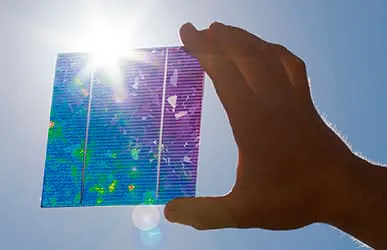
Photovoltaic Test System – PV-LIT

Get advantages in costing and quality by non-contact thermographic testing of your solar cells and PV-modules.

Automation InfraTec INDU-SCAN - In-process industrial temperature measurement
Indus­trial Auto­ma­tion

Process Control – INDU-SCAN

Contactless measurement of temperature distributions and profiles with industrial thermographic cameras permits efficient monitoring and control of temperature-dependent processes and procedures within a system-integrated quality assurance programme in industry.

Quality control for more precision in press hardening PRESS-CHECK
Indus­trial Auto­ma­tion

Quality Control or Press Hardening – PRESS-CHECK

Check the microstructures of sheet metal parts during the stamping process and establish a uniform high strength and quality of all produced stampings safely and with a contact-free method.

WELD-CHECK by InfraTec
Non-destructive Testing

Welding Inspec­tion – WELD-CHECK

Using pulse thermography, WELD-CHECK enables you a quantitative assessment of the inspected welds.

Thermographic automation brake test bench - Picture Credits: © iStock.com / ktsimage
Non-destructive Testing

High-Speed Rotation Test Bench – TRC

Check for long-life fatigue strength of mechanical components in load tests, using high-end infrared cameras.

E-Lit Cabinet from InfraTec for Infrared Thermography
Non-destructive Testing

Electronic / Semiconductor Testing – E-LIT

Detect inhomogeneous temperature distribution and local power loss during the production using the Lock-in Thermography.

PV-LIT test solution for solar cells
Non-destructive Testing

Photovoltaic Test System – PV-LIT

Get advantages in costing and quality by non-contact thermographic testing of your solar cells and PV-modules.

Lock-In Ther­mo­graphy is Integ­rated in IRBIS® 3 Soft­ware

material testing

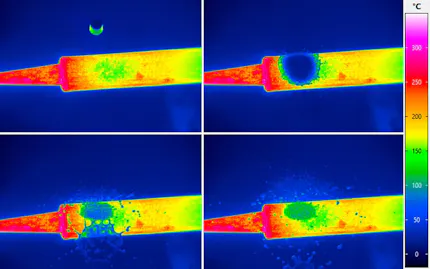
Active thermography can detect defects even more precisely when the activation of the test object will be carried out in a pulsed mode. Thereby it will be possible to detect faults which are located in deeper subsurface layers. Such analysis algorithms like the one of lock-in thermography are already available as a module of the IRBIS® 3 software family. The adaptation to the specific application can be done quite easily with flexibility. InfraTec can also provide customer specific and complete active thermography test solutions.

Advant­ages of this Ther­mo­graphy Solu­tions in this Applic­a­tion

InfraTec thermography - High-speed Mode

High-speed Mode

Faster Measurement with a Constant Field of View

Due to binning technology, infrared cameras have an additional high-speed mode in which the frame rate increases to more than three times and the thermal resolution can be doubled.

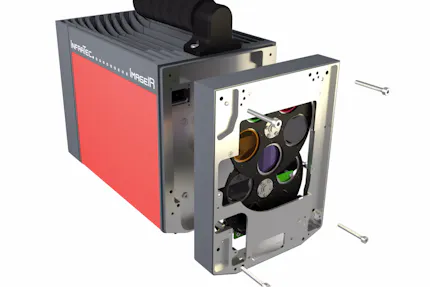
HighSense for thermographic camera series ImageIR®

High­Sense Function

Guaranteed Flexibility and Measurement Accuracy

Due to this innovative feature, the cameras' measurement accuracy remains unchanged even when integration times or measurement ranges are altered. This will save users both time and money.

InfraTec Service Calibration Rig

Auto Calibration

The Auto Calibration option expands the HighSense function to include automatic, dynamic adaptation of the integration time. This ensures the utmost temperature measuring accuracy and an optimised signal-to-noise ratio throughout the process. The wellfill of a detector is usually optimal in certain areas of the dynamic range. If the measured object signal is outside theses or user-specified limits, the integration time is readjusted.

Trigger interface for ImageIR® and TarisIR® cameras

Trigger Interface

Interface for Incoming and Outgoing Control Signals
Trigger signals to or from the camera can be used to control and synchronise image data acquisition. Thermographic measurements can also be used to control processes.

Thermografie-Kameraserie ImageIR® mit neuer 10 GigE-Schnittstelle

10 GigE Inter­face

Ultra-fast Data Transfer
High-resolution detectors and high frame rates generate large amounts of data. With the 10 Gigabit Ethernet interface, this data can be transferred quickly, reliably and without loss.

InfraTec glossary - Rotating filter- und aperture wheel

Filter & Aper­ture Wheel

Measurement of High Temperatures & Spectral Ranges

Up to two individually combinable wheels equipped with filters and apertures allow the camera sensitivity to be adjusted to the specific requirements of demanding measurement tasks.

ImageIR filter wheel replacement

Multispectral Feature

The multispectral feature makes it possible to record sequences with constantly changing spectral filters. Images are recorded synchronously with a rapidly rotating filter wheel equipped with the filters. It may be possible to switch between up to seven filters, depending on the version. Due to this the multispectral measurement can be optimised to suit the measuring task if the preset ranges are unsuitable. The integration times can be adapted within the limits calibrated for this filter.

Thermal image during ignition of an airbag  Image Small

Window Mode

Fast Measurements in Defined Subsections

Capture very fast temperature and motion sequences in full, half, quarter and sub modes, as well as in sub image formats defined by click-and-drag, using high frame rates.

InfraTec thermography - Thermal resolution

Thermal Resol­u­tion – Determ­in­a­tion of Differ­ences of Only a Few Millikelvin

For detection of small temperature changes InfraTec's infrared cameras offer thermal resolutions up to < 15 mK in real-time operation. By using the Lock-in Thermography method it is possible to further increase this resolution significantly. For this purpose test objects are periodically excited and non-destructively examined for defects and irregularities.

InfraTec thermography - High-speed Mode

High-speed Mode

Faster Measurement with a Constant Field of View

Due to binning technology, infrared cameras have an additional high-speed mode in which the frame rate increases to more than three times and the thermal resolution can be doubled.

HighSense for thermographic camera series ImageIR®

High­Sense Function

Guaranteed Flexibility and Measurement Accuracy

Due to this innovative feature, the cameras' measurement accuracy remains unchanged even when integration times or measurement ranges are altered. This will save users both time and money.

InfraTec Service Calibration Rig

Auto Calibration

The Auto Calibration option expands the HighSense function to include automatic, dynamic adaptation of the integration time. This ensures the utmost temperature measuring accuracy and an optimised signal-to-noise ratio throughout the process. The wellfill of a detector is usually optimal in certain areas of the dynamic range. If the measured object signal is outside theses or user-specified limits, the integration time is readjusted.

Trigger interface for ImageIR® and TarisIR® cameras

Trigger Interface

Interface for Incoming and Outgoing Control Signals
Trigger signals to or from the camera can be used to control and synchronise image data acquisition. Thermographic measurements can also be used to control processes.

Thermografie-Kameraserie ImageIR® mit neuer 10 GigE-Schnittstelle

10 GigE Inter­face

Ultra-fast Data Transfer
High-resolution detectors and high frame rates generate large amounts of data. With the 10 Gigabit Ethernet interface, this data can be transferred quickly, reliably and without loss.

InfraTec glossary - Rotating filter- und aperture wheel

Filter & Aper­ture Wheel

Measurement of High Temperatures & Spectral Ranges

Up to two individually combinable wheels equipped with filters and apertures allow the camera sensitivity to be adjusted to the specific requirements of demanding measurement tasks.

ImageIR filter wheel replacement

Multispectral Feature

The multispectral feature makes it possible to record sequences with constantly changing spectral filters. Images are recorded synchronously with a rapidly rotating filter wheel equipped with the filters. It may be possible to switch between up to seven filters, depending on the version. Due to this the multispectral measurement can be optimised to suit the measuring task if the preset ranges are unsuitable. The integration times can be adapted within the limits calibrated for this filter.

Thermal image during ignition of an airbag  Image Small

Window Mode

Fast Measurements in Defined Subsections

Capture very fast temperature and motion sequences in full, half, quarter and sub modes, as well as in sub image formats defined by click-and-drag, using high frame rates.

InfraTec thermography - Thermal resolution

Thermal Resol­u­tion – Determ­in­a­tion of Differ­ences of Only a Few Millikelvin

For detection of small temperature changes InfraTec's infrared cameras offer thermal resolutions up to < 15 mK in real-time operation. By using the Lock-in Thermography method it is possible to further increase this resolution significantly. For this purpose test objects are periodically excited and non-destructively examined for defects and irregularities.

Papers of our Customers

Reliability-based technology transfer using the example of crack luminescence, Paul Gerards-Wünsche, Falk Hille Bundesanstalt für Materialforschung und -prüfung, Berlin, Deutschland (Article in German)

Infrared Camera: ImageIR®
Transitioning self-developed non-destructive testing (NDT) methods from laboratory research to industrial applications presents significant challenges. For visual NDT techniques, such as the crack luminescence method used in this study, automating defect detection through computer vision systems is a logical next step. When combined with continuous structural monitoring, such systems evolve into an AI-assisted structural health monitoring (SHM) method. 

Thermography IR applied to analyse the influence of the deformation speed in the forming process, Manuel San Juan Blanco et al., Universidad de Valladolid

Structural design of flexible Au electrode to enable shape memory polymer for electrical actuation, Haibao Lu et al., Harbin Institute of Technology

Dynamic buckling behavior of thin metal film lines from substrate, Dan Wu et al., Tsinghua University Beijing

Nondestructive testing by using long-wave infrared interferometric techniques with CO2 lasers and microbolometer arrays, Igor Alexeenko et al., Immanuel Kant Baltic Federal University

Self-healing epoxy with ultrafast and heat-resistant healing system processable at elevated temperature, Xiao Ji Ye et al., Sun Yat-Sen University

Friction riveting of pultruded thermoset glass fiber reinforced polyester composite and TI6AL4V hybrid joints, Natascha Zocoller Borba et al., Helmholtz-Zentrum Hereon

Force Controlled Friction Riveting of Glass Fiber Reinforced Polyamide 6 and Aluminum Alloy 6056 Hybrid Joints, Bruno C Proenca et al., Helmholtz-Zentrum Hereon

The influence of the composite features on the mechanical performance of hybrid thermoset composite-metal friction-riveted joints, Natascha Zocoller Borba et al., Helmholtz-Zentrum Geesthacht GmbH

Combustion synthesis of Ni/Al base composites, Xiaomeng Zhu et al., Wuhan University of Technology

Plasticized and reinforced poly(methyl methacrylate) obtained by a dissolution-dispersion process for single point incremental forming, S.L. Clavijo-Chaparro et al., Escuela de Ingeniería y Ciencias

In situ reactor to image catalysts at work in three-dimensions by Bragg coherent X-ray diffraction, Amélie Rochet et al., Center for Research in Energy and Materials (CNPEM)

Metallurgical and mechanical properties of continuous drive friction welded copper/alumina dissimilar joints, Peng Li et al., Dalian University of Technology

Automated jitter correction for IR image processing to assess the quality of W7-X high heat flux components, H. Greuner et al., Max Planck Institute for Plasma Physics

A numerical approach for investigating thermal contact conductance, Y. Frekers et al., RWTH Aachen University

Thermal shock behaviour of laminated multilayer refractories for steel casting applications reinforced by residual stresses, Daniel Jakobsen et al., University of Erlangen-Nuremberg

FricRiveting of aluminum 2024-T351 and polycarbonate: Temperature evolution, microstructure and mechanical performance, C.F. Rodrigues et al., Helmholtz-Zentrum Geesthacht

Correlation of internal and surface temperatures during laser cutting of epoxy-based carbon fibre reinforced plastics, Sven Bluemel et al., Laser Zentrum Hannover e.V.

Determination of time-dependent thermal contact conductance through IR-thermography, E.M. Burghold et al., RWTH Aachen University

Approach to the Study of Workpiece Damage in Drilling of Carbon Fiber Composites by Using Thermography IR, Manuel San Juan Blanco et al., Universidad de Valladolid

Autonomous Robotic System for Thermographic Detection of Defects in upper Layers of Carbon Fiber Reinforced Polymers, Morris Antonello et al., University of Padova

Non-destructive inspection of aircraft composite materials using triple IR imaging, S. Moustakidis et al., City University of London

Passive impulse thermography during quasi-static tensile tests of fiber reinforced composites, Vitalij Popow et al., Institut für Verbundwerkstoffe GmbH

Thermografie mit optimierter Anregung für die quantitative Untersuchung von Delaminationen in kohlenstofffaserverstärkten Kunststoffen, Jan P. Müller et al., Bundesanstalt für Materialforschung und -prüfung Berlin

Review of thermal imaging systems in composite defect detection, I. Jorge Aldave et al., Centro de Tecnologías Aeronáuticas (CTA)

Lock-in Thermography for the Development of New Materials, Peter W. Nolte et al., Branch Lab of Fraunhofer Institute for Microstructure of Materials and Systems IMWS

Poten­tial approach of IR-analysis for high heat flux quality assess­ment of divertor tung­sten monoblock compon­ents, Henri Greuner et al., Max-Planck-Institut für Plasmaphysik

Infrared Camera: VarioCAM® High Definition

Invest­ig­a­tion of inter­dif­fu­sion and inter­metallic compounds in Al–Cu joint produced by continuous drive fric­tion welding, Yanni Wei et al., Northwestern Polytechnical University Xi’an

Eigen­span­nung­sreduk­tion in strahl­gesch­weißten Nähten mittels Span­nung­sum­la­gerung durch den Einsatz defok­ussierter Elektronen- bzw. Laser­strahlen , Florian Tölle, Bundesanstalt für Materialforschung und -prüfung (BAM)

Infrared Camera: VarioCAM® hr

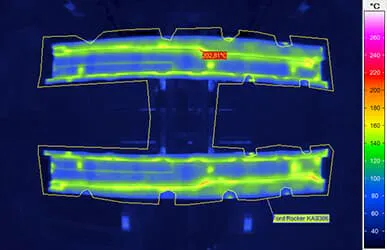
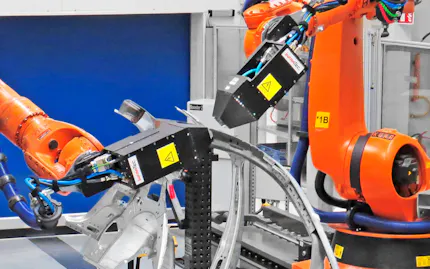
Konzep­tion und Aufbau einer robotergestützten Platt­form für optisch angeregte Wärme­fluss-Ther­mo­grafie,Guido Mahler et al., InfraTec GmbH

Ther­mo­grafische Laser­naht­prü­fung von Mehrblech-Verbindungen im Auto­mobil-Karos­ser­iebau, Guido Mahler, InfraTec GmbH

NDT Damage Diagnosis on Sand­stone – The Case Study of Gelnhausen, Germany, Christoph Franzen et al., Institut für Diagnostik und Konservierung an Denkmalen in Sachsen und Sachsen-Anhalt e. V.

Infrared Camera: VarioCam® Series

Perform­ance Compar­ison between ImageIR® 8300 hp and ImageIR® 10300 on a Ther­moelastic Stress Analysis Exper­i­ment, V. Le Saux, S.-A. Wode, Institut de Recherche Dupuy de Lôme

Infrared Cameras: ImageIR® 8300 hp and ImageIR® 10300

A reference-free micro defect visualization using pulse laser scanning thermography and image processing, Jinyeol Yang et al., Samsung Electronics, Asan

Plasticity induced heating – an underestimated effect in monotonic and cyclic deformation, Jürgen Bär, University of the Bundeswehr

Evaluation of the Thermo-Elastic Behavior of a High-alloyed Steel by Fourier Transformation based Lock-In-Thermography; R. Urbanek, J. Bär; Institute of Materials Science, University of the Bundeswehr

Characterization of SRM plumes with alumina particulate in subscale testing, Dominik Saile et al., German Aerospace Center (DLR)

Computational design of a heated PMMA window validated by infrared thermography, Stefan Kolling et al., Technische Hochschule Mittelhessen

Azobenzene-dyed, nanofibrous microstructure for improving photothermal effect of polymer gel electrolyte, Yifu Huang et al., Shantou University

Infrared Camera: VarioCAM® HD 780

Infrared thermal imaging as a non-destructive investigation method for building archaeological purposes, Anna Luib, University of Bamberg

Infrared Camera: VarioCAM® HD

Quantification of Delaminations in Semitransparent Solids Using Pulsed Thermography and Mathematical 1D Models, R. Bernegger et al., Bundesanstalt für Materialforschung und -prüfung (BAM)

Applic­a­tion of ther­mo­graphy to analyse the influ­ence of the deform­a­tion speed in the forming process, M. San Juan et al., Universidad de Valladolid

Terahertz spectroscopy for the non-destructive testing of plastic joints with focus on weld quality, Dr. Benjamin Baudrit, Süddeutsches Kunststoff-Zentrum (SKZ) et al.

Experimental validation and uncertainty analysis of an innovative IoT infrared sensor for in-situ wall thermal transmittance measurement

Innovative method for in-situ determination of the heat transfer coefficient (U-value) of building walls, based on infrared thermography and IoT technology. The thermographic camera is used to precisely determine the emissivity of the wall surface. The thermograms enable reliable calibration of the system under real conditions.

Ein Beitrag zur Untersuchung des Ermüdungsverhaltens mittels thermografischer Methoden

Austenitic TRIP/ TWIP Steels and Steel-Zirconia Composites // Design of Tough, Transformation-Strengthened Composites and Structures

Strain Rate Dependent Mechanical Properties of TWIP Steel

Microstructure transformations in a press hardening steel during tailored thermo‐mechanical processing

Characterization and Interpretation of the Aluminum Zone Refining through Infrared Thermographic Analysis

Characterization of Phase Transformations During Graded Thermo-Mechanical Processing of Press-Hardening Sheet Steel 22MnB5

Active Thermography for the Detection of Sub-Surface Defects on a Curved and Coated GFRP-Structure

Suitability of lock-in infrared thermography for luminescent glass development

Tracking the dynamics of power sources and sinks during the martensitic transformation of a Cu-Al-Ni single crystal

Identification of the Damage Scenarios under Cyclic Loading of a Coated 300M Steel by Infrared Thermography Measurements

Generation of Polyamide 12 Coatings on Stainless Steel Substrates by Directed Energy Deposition with a Thulium-Doped Fiber Laser (DED-LB/P)

Laser excited super resolution thermal imaging for nondestructive inspection of internal defects

Super-Resolution Thermografie

Guiding synthetic dynamic soft materials to grow like living organisms (Dissertation)

Achieving anti-sintering of supported platinum nanoparticles using a thermal management strategy

Feasibility study of friction stir joining of aluminium with carbon fibre reinforced thermoplastic composite

Determination of Strain Limits for Dimensioning Polyurethane Components

Infrared Cameras for Material Testing

InfraTec Infrared camera
Zoom Cameras

ImageIR® 6300 Z

Image Format(640 x 512) IR Pixel

Infrared camera ImageIR® 12300
High-end Cameras

ImageIR® 12300

Image Format(2,560 x 2,048) IR Pixel

Infrared camera ImageIR 6300 from InfraTec
System Cameras

ImageIR® 6300

Image Format(640 x 512) IR Pixel

infrared camera TarisIR mini from InfraTec
Compact Cameras

TarisIR® mini 600

Image Format(640 x 480) IR Pixel

InfraTec Infrared camera
System Cameras

VarioCAM® HD head 900

Image Format(2,048 x 1,536) IR Pixel

InfraTec Infrared camera
High-end Cameras

ImageIR® 8300 hs

Image Format(640 x 512) IR Pixel

InfraTec Infrared camera
High-end Cameras

ImageIR® 9400 hp

Image Format(2,560 x 2,048) IR Pixel

InfraTec Infrared camera
High-end Cameras

ImageIR® 10300

Image Format(1,920 x 1,536) IR Pixel

InfraTec Infrared camera
High-end Cameras

ImageIR® 9400

Image Format(2,560 x 2,048) IR Pixel

Asso­ci­ated Indus­tries & Applic­a­tions

thermal imaging for automotive applications

Auto­motive Industry

Infrared camera systems help you to secure a high product quality in production and at your suppliers.

thermal imaging in aviation

Aerospace Industry

Comply with highest security demands by applying state-of-the-art infrared camera systems.
All branches and application areas