


Tailor the Detector Specifically to Your Measurement Task
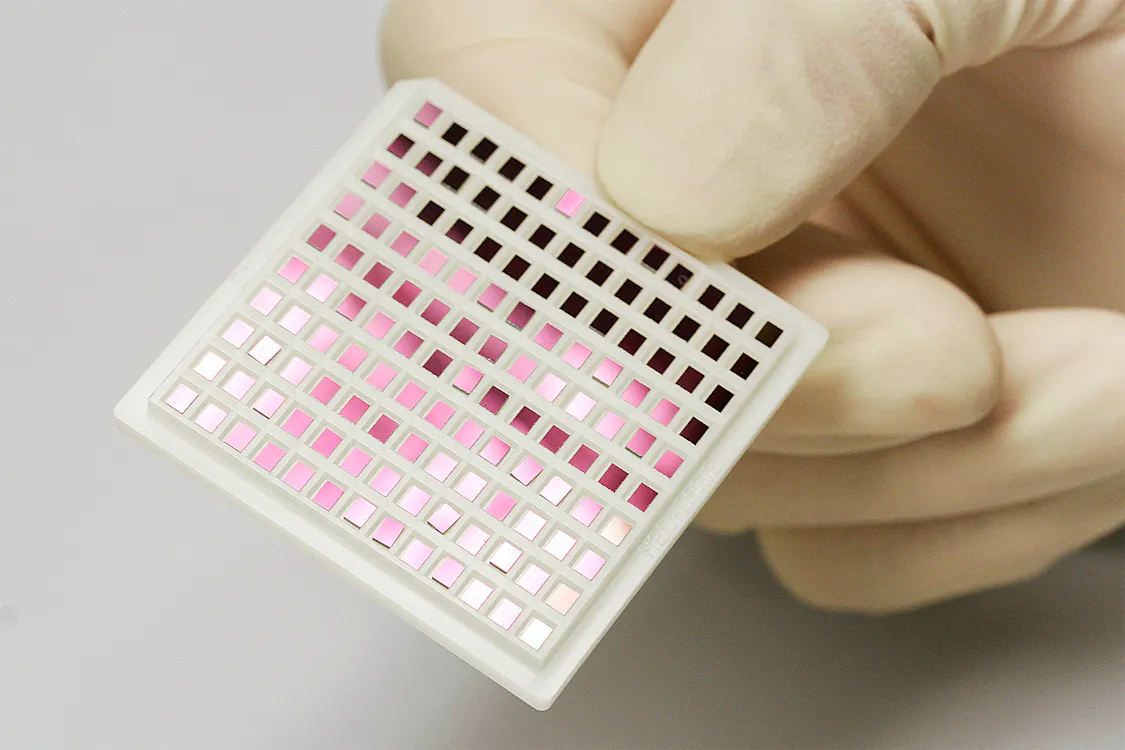
The IR window of a pyroelectric detector protects internal components, such as the IR-sensitive chip and the electronics, from environmental influences. For infrared radiation, IR windows offer a wide transmission range, for example, above a cutoff wavelength (long-wave pass, LWP) or between a lower and upper cutoff wavelength (wide-bandpass, WBP). If the transmission range is restricted by additional measures to the very narrow absorption band of a measurement gas, these are referred to as IR filters or narrow-bandpass filters (NBP). Restricting the wavelength range using IR filters and windows makes it possible to obtain a distortion-free measurement signal, selectively suppress cross-sensitivities to other gases in the environment, and improve the signal-to-noise ratio.
InfraTec offers a wide range of IR windows and filters for its pyroelectric detectors, allowing users to tailor the detectors’ spectral characteristics to their specific needs. The company’s website now features a tabular list of all narrow-bandpass filters offered in its standard portfolio, including specifications for center wavelength (CWL), half-power bandwidth (HPBW), application range, and filter design. In addition, the website lists the detectors with which the IR filters can be used and provides the corresponding data sheets.
For the IR windows, which are also listed in a table, the website provides information on their materials and properties, as well as their transmission ranges. The IR windows are also paired with the corresponding detectors, complete with data sheets. A product filter, which can be configured using sliders or by entering data, helps users quickly find the ideal window-detector combination for the desired transmission range.